How can we create reflective learners who can regulate the strategies they use to learn? We specialise in helping schools to boost reflective learning by focusing on self-regulated learning and innovative metacognitive strategies!
Are you an educator looking to elevate your teaching strategies and empower your students to take charge of their learning? The Global Metacognition Institute has developed a comprehensive CPD (Continuing Professional Development) course designed for teachers, educators, and educational leaders who work with students aged 11-18. This course will equip you with innovative tools and strategies to foster metacognitive skills and self-regulated learning in your classroom.
What Does the Metacognition Course Cover?
Our course delves into three critical areas of educational practice:
Metacognition: Understanding how students think about their own learning.
Metacognitive Strategies: Teaching students to plan, monitor, and evaluate their learning processes.
Self-Regulated Learning: Encouraging students to set goals, manage their time effectively, and reflect on their progress.
By mastering these concepts, educators can help students become more independent learners, improving academic outcomes and personal growth.
Key Features of the Course
The course provides an interactive and resource-rich learning experience, including:
Printable Workbook: A comprehensive guide to complement the video lectures, encouraging hands-on engagement.
14 Downloadable Teaching Resources: Ready-to-use materials to implement strategies in your classroom immediately.
Exclusive Video Lectures: Expert-led sessions that provide actionable insights into metacognitive teaching methods.
Curated Article Links: Stay informed with the latest research and practical applications in metacognition and self-regulated learning.
What You’ll Achieve
By the end of this course, you will:
Gain a deep understanding of metacognition and its role in education.
Learn to apply a variety of evidence-based strategies to promote self-regulated learning in students.
Access practical resources and ideas to transform your teaching practices.
Receive a Certificate of Completion from Udemy, with the option to earn an Advanced Certificate in Metacognition & Self-Regulated Learning upon completing a final essay assignment.
Who Should Enrol?
This course is ideal for:
Teachers seeking to enhance their professional development.
Educational leaders aiming to implement school-wide improvements.
Teacher trainers and SEN educators dedicated to improving student outcomes.
Whether you are new to the concepts of metacognition or looking to refine your skills, this course provides invaluable insights for educators at all levels.
Why Choose the Global Metacognition Institute?
The Global Metacognition Institute is a leader in educational innovation, specialising in metacognitive strategies and self-regulated learning. With a proven track record of empowering educators worldwide, we are committed to providing cutting-edge resources that make a real difference in classrooms.
Enrol Today and Transform Your Teaching!
Don’t miss this opportunity to enhance your teaching practice and empower your students to take ownership of their learning. Visit Udemy to sign up for the course today and take the first step towards becoming a more effective, metacognitively aware educator.
By investing in this CPD course, you’ll not only improve your professional skills but also make a lasting impact on your students' educational journeys.
Start your metacognition journey now—because great teaching begins with great thinking!
The Metacognitive Awareness Inventory (MAI) is a well-established tool for evaluating metacognitive awareness, widely used to help educators and researchers understand learners' self-regulatory and reflective capabilities. However, recognising the need for a more accessible version tailored to younger learners, we developed the Metacognitive Awareness Checker. This revised tool is designed to better accommodate the developmental and practical needs of this demographic, providing a streamlined and engaging approach to assessing metacognitive skills.
Key updates to the original MAI make the Checker more user-friendly and effective for younger students. First, the number of items has been reduced from 52 to 30, simplifying the process while maintaining the tool’s diagnostic value. Second, all language has been adjusted to ensure age-appropriate clarity, enabling younger learners to fully comprehend and engage with the questions. Additionally, the scoring system has been revised to deliver a single metacognitive awareness score, eliminating the complexity of multiple subscales and making results easier to interpret and apply.
To enhance its educational impact, the Checker includes integrated target-setting activities. These features guide students in using their results to set actionable goals for improving their metacognitive skills, fostering a deeper connection between assessment and growth. Finally, the addition of visually appealing graphics ensures the tool is not only functional but also engaging, encouraging sustained interest and interaction among younger users. The Metacognitive Awareness Checker offers an innovative solution for supporting the development of reflective and independent learners in an accessible and engaging way.
Monitoring and Evaluating Students’ Metacognitive Development: Why It's Important
Monitoring and evaluating students’ metacognitive development is a critical aspect of education that extends beyond traditional teaching practices. Metacognition, often described as “thinking about thinking,” encompasses the processes by which students plan, monitor, and assess their understanding and performance. These skills are not only fundamental to academic success but are also essential for lifelong learning and personal growth. By systematically assessing students’ metacognitive abilities, educators can identify strengths and areas for improvement, enabling more targeted and effective teaching strategies.
Understanding how students approach learning is as important as the content they learn. A student who memorises facts without understanding how to evaluate or apply them lacks the tools for deeper engagement with material. Monitoring metacognition allows teachers to see whether students are reflecting on their learning processes, identifying gaps in their understanding, and adjusting their strategies accordingly. This insight helps educators design interventions that encourage more effective learning habits, fostering independent and self-aware learners.
Assessment of metacognitive development provides a means to ensure equity in education. Not all students naturally engage in metacognitive practices; some may require explicit instruction and support to develop these skills. By evaluating metacognition, teachers can identify students who struggle with planning, monitoring, or evaluating their work and provide additional guidance. This proactive approach ensures that all students, regardless of their starting point, have the opportunity to develop the critical skills necessary for success.
Regular evaluation also helps students take ownership of their learning. When students are aware of their metacognitive strengths and weaknesses, they are better equipped to set realistic goals and track their progress. This process fosters a growth mindset, as students learn to view challenges as opportunities for improvement rather than obstacles. Empowering students with this awareness not only enhances their academic performance but also builds confidence and resilience.
Moreover, monitoring metacognitive development aligns with evidence-based teaching practices. Research highlights metacognition as a high-impact strategy for improving learning outcomes, and tools like the Metacognitive Awareness Inventory (MAI) provide educators with a structured approach to assessment. Incorporating metacognitive evaluation into classroom practices supports data-driven decision-making, enabling educators to refine their methods and maximise student potential.
Metacognition also has broader implications for emotional and social development. Students who are skilled in monitoring and regulating their thoughts are often better at managing their emotions and interpersonal relationships. By assessing and fostering metacognitive skills, educators contribute to the holistic development of students, preparing them not only for academic challenges but also for the complexities of life beyond school.
Monitoring and evaluation of metacognition should not be viewed as an added burden but as an integral part of effective teaching. Simple tools such as self-reflection journals, learning logs, and peer discussions can be used to assess metacognitive progress without disrupting lesson flow. When these practices are embedded into the curriculum, they create a classroom culture that values reflection and continuous improvement.
In addition to benefiting students, monitoring metacognition helps teachers refine their own practices. Understanding how students think about their learning provides valuable feedback on instructional effectiveness. Teachers can adjust their approaches, incorporate new strategies, and ensure their methods support the development of reflective and independent learners.
Focusing on metacognitive development transforms the educational experience for both students and teachers. It promotes deeper learning, fosters independence, and equips students with the skills to navigate an increasingly complex world. By committing to the regular monitoring and evaluation of metacognition, educators not only enhance academic outcomes but also prepare their students for lifelong success.g.
How To Access Our Student-Friendly Metacognitive Awareness Inventory
The Metacognitive Awareness Checker, our student-friendly adaptation of the Metacognitive Awareness Inventory, is available exclusively to our customers and members. Customers who place an order with us will receive a ‘Thank You’ email with a link to download the resource at no additional cost. Members with a full membership plan can access the Checker directly from the ‘Bonus Gifts’ section of the Member’s Area. This thoughtfully designed resource simplifies metacognitive assessment for younger learners, making it both accessible and practical, while encouraging the development of reflective and independent thinking skills.
Subscribe to our free mailing list and we'll send you a link to download our new Growth Mindset Toolkit as a token of our gratitude!
A growth mindset is one that views mental abilities as developing, not as fixed. Moreover, a growth mindset understands that through hard-work, effective learning strategies, perseverance and effectively responding to feedback it is possible to increase the rate of that development. The aim of these free teaching resources is to introduce the concept of growth mindset to students, help them identify where they have a fixed-mindset, and establish targets that will help them to foster changes in their perspective.
The resource pack includes three double-sided colour worksheets and an instructional presentation. We recommend using the worksheets on separate occasions instead of all at once, perhaps over the course of a term. These free growth mindset teaching resources are an effective way to introduce growth mindset to students in your school: subscribe to our mailing list and the automated confirmation email will include a link so that you can download them instantly!
Scroll down and enter your email address to subscribe for free!
Metacognition, the awareness and regulation of one's own thinking processes, plays a pivotal role in education. For educators, a deep understanding of metacognition is essential to help students become self-directed learners who can plan, monitor, and adjust their learning strategies. This article explores various definitions and perspectives of metacognition, offering educators a comprehensive overview of its many facets. By exploring concepts such as metacognitive knowledge, executive control processes, and mindful engagement with learning tasks, we aim to equip educators with insights to enhance their teaching practices and foster metacognitive skills in their students.
After outlining different ways of looking at metacognition, the article provides practical advice in how teachers can focus on metacognition in those terms.
Ways of Thinkimg About Metacognition
Metacognition as 'Thinking About Thinking'
Metacognition, understood as "thinking about thinking," involves the capacity to reflect on and analyze one's own cognitive processes. This means being aware of how you acquire knowledge, solve problems, and make decisions. It includes recognizing your thought patterns, understanding how you learn best, and being able to adjust your strategies accordingly. By engaging in this level of self-reflection, individuals can improve their ability to process information and enhance their overall learning experience.
Metacognition as 'The Cognitive Aspect of Self-Regulated Learning' [and the self-regulated learning cycle of planning, monitoring, evaluating, and regulating]
When viewed as the cognitive aspect of self-regulated learning, metacognition plays a crucial role in managing one's own educational journey. This involves the self-regulated learning cycle: planning by setting goals and choosing appropriate strategies; monitoring progress and comprehension during the learning process; evaluating outcomes by assessing performance against objectives; and regulating by making necessary adjustments to strategies or efforts. Metacognition enables learners to take control of their learning, leading to greater independence and effectiveness.
Metacognition in terms of Metacognitive Knowledge
Metacognitive knowledge refers to an individual's understanding of their own cognitive processes and the factors that influence them. This includes knowledge about oneself as a learner (strengths and weaknesses), knowledge about various cognitive tasks (what is required to perform them), and knowledge about strategies (how and when to use them effectively). By having metacognitive knowledge, learners can make informed decisions about how to approach learning tasks, select appropriate methods, and optimize their performance.
Metacognition in terms of Metacognitive Awareness
Metacognitive awareness is the conscious recognition of one's own thought processes during learning or problem-solving activities. It involves being mindful of how you are thinking, feeling, and reacting as you engage with a task. This awareness allows individuals to detect confusion, recognize when they are not understanding something, and take steps to clarify or seek help. By being metacognitively aware, learners can adjust their approaches in real-time to enhance comprehension and retention.
Metacognition as 'Executive Control Processes'
Understanding metacognition as executive control processes highlights its role in overseeing and managing cognitive activities. This perspective focuses on the ability to plan tasks, monitor progress, inhibit irrelevant or distracting thoughts, and switch strategies when necessary. Executive control enables individuals to coordinate various mental functions, maintain focus on goals, and adapt to new information or changing circumstances. It is essential for effective problem-solving and efficient learning.
Metacognition as 'Self-awareness of Cognitive Strategies'
When metacognition is seen as self-awareness of cognitive strategies, it emphasizes knowing the specific techniques one uses to think, learn, and solve problems. This includes being aware of the strategies' effectiveness and appropriateness for different tasks. By understanding their own cognitive strategies, individuals can intentionally select and apply the best methods for a given situation, leading to improved learning outcomes and problem-solving abilities.
Metacognition as 'Reflection on One's Own Learning Processes'
Metacognition as reflection involves thoughtfully examining how one learns and processes information. This means considering past learning experiences, assessing what worked or didn't, and understanding the reasons behind successes or challenges. Through reflection, learners can identify patterns in their learning behavior, recognize areas for improvement, and develop more effective strategies. This ongoing self-assessment fosters a deeper engagement with the material and promotes lifelong learning skills.
Metacognition as 'Conscious Regulation of Cognitive Activities'
Viewing metacognition as the conscious regulation of cognitive activities underscores the deliberate control over one's mental processes. This involves setting specific goals, focusing attention, choosing appropriate strategies, and adjusting efforts based on feedback or self-monitoring. By consciously regulating their cognition, individuals can optimize their learning experiences, stay motivated, and overcome obstacles more effectively.
Metacognition as 'Strategic Knowledge About When and How to Use Certain Cognitive Strategies'
This perspective of metacognition centers on possessing strategic knowledge about the timing and application of various cognitive strategies. It means understanding not just a range of strategies but also knowing which ones are most suitable for specific tasks or problems. By having this strategic awareness, learners can adapt their approaches to different learning contexts, enhancing efficiency and effectiveness in acquiring new knowledge or skills.
Metacognition as 'Mindful Engagement with Learning Tasks'
When metacognition is defined as mindful engagement with learning tasks, it focuses on being fully present and attentive during the learning process. This involves a conscious awareness of one's thoughts, feelings, and bodily sensations while engaging with material. Mindful engagement helps reduce distractions, increases focus, and allows for a deeper connection with the content. By cultivating mindfulness, learners can enhance their comprehension, memory retention, and overall enjoyment of the learning experience.
Examples of Metacognition in Practice
Metacognition as 'Thinking About Thinking'
Example of a student developing metacognition:
A student notices that she struggles to comprehend complex texts in her literature class. She begins to reflect on her thought processes while reading and realizes that she often skims without fully engaging with the material. By thinking about how she thinks, she decides to annotate the text and ask herself questions as she reads, which improves her understanding.
How teachers can foster metacognition in their lessons:
Teachers can encourage students to reflect on their thinking by incorporating activities that prompt self-questioning. For instance, after a reading assignment, a teacher might ask students to write down what strategies they used to understand the text and how effective those strategies were. This practice helps students become more aware of their cognitive processes and adapt them for better learning outcomes.
Metacognition as 'The Cognitive Aspect of Self-Regulated Learning' [and the self-regulated learning cycle of planning, monitoring, evaluating, and regulating]
Example of a student developing metacognition:
A student preparing for a science project begins by planning his research approach. He sets specific goals and timelines, monitors his progress by checking off completed tasks, evaluates his work by comparing it against the project criteria, and regulates his efforts by adjusting his plan when he falls behind schedule. This cycle enhances his ability to manage his learning effectively.
How teachers can foster metacognition in their lessons:
Teachers can introduce the self-regulated learning cycle by guiding students through the stages of planning, monitoring, evaluating, and regulating within classroom activities. For example, during a long-term assignment, teachers can have students create action plans, keep progress journals, perform self-assessments, and adjust their strategies based on feedback. This approach helps students internalize the process and apply it independently.
Metacognition in terms of Metacognitive Knowledge
Example of a student developing metacognitive knowledge:
A student recognizes that she learns new vocabulary best when she writes the words in sentences rather than just memorizing definitions. She understands her strength in contextual learning and applies this strategy across subjects. By knowing her cognitive preferences, she tailors her study methods to be more effective.
How teachers can foster metacognition in their lessons:
Teachers can help students develop metacognitive knowledge by encouraging them to reflect on their learning preferences and strategies. This can be done through surveys, discussions, or learning style assessments. By providing various learning activities and prompting students to consider which methods work best for them, teachers support students in understanding and leveraging their cognitive strengths.
Metacognition in terms of Metacognitive Awareness
Example of a student developing metacognitive awareness:
During a math lesson, a student realizes that he becomes confused when solving multi-step problems. He becomes aware of his tendency to lose track of steps and decides to write down each part of the problem explicitly. This awareness of his cognitive process allows him to adjust his approach and improve his problem-solving skills.
How teachers can foster metacognition in their lessons:
Teachers can promote metacognitive awareness by asking students to pause and reflect on their thinking during tasks. For instance, a teacher might prompt students to share what they are thinking at a particular moment in solving a problem or to predict potential difficulties before starting an assignment. This practice helps students become more conscious of their thought processes and learn to adjust them as needed.
Metacognition as 'Executive Control Processes'
Example of a student developing metacognition:
A student working on a research paper exercises executive control by planning her work schedule, staying focused despite distractions, and switching strategies when she encounters obstacles. She monitors her progress and makes decisions about how to allocate her time effectively, demonstrating control over her cognitive activities.
How teachers can foster metacognition in their lessons:
Teachers can strengthen students' executive control processes by teaching organizational and planning skills. They might provide templates for project planning, model how to set priorities, and discuss strategies for maintaining focus. By giving students tools to manage their cognitive activities, teachers help them develop the ability to control their learning processes actively.
Metacognition as 'Self-awareness of Cognitive Strategies'
Example of a student developing metacognition:
A student realizes that summarizing information in his own words helps him retain knowledge better than rereading the textbook. He becomes aware of this effective cognitive strategy and begins to use it regularly when studying for exams, leading to improved academic performance.
How teachers can foster metacognition in their lessons:
Teachers can encourage self-awareness of cognitive strategies by having students share and discuss the methods they use to learn. This could involve group discussions where students explain their study techniques or reflect on which strategies have been most successful for them. By highlighting different approaches, teachers help students become more conscious of their own strategies and consider adopting new ones.
Metacognition as 'Reflection on One's Own Learning Processes'
Example of a student developing metacognition:
After receiving feedback on an essay, a student reflects on the writing process she followed. She realizes that she didn't allocate enough time for revising her draft. By reflecting on her learning process, she decides to start future assignments earlier and incorporate multiple rounds of revision, which enhances the quality of her work.
How teachers can foster metacognition in their lessons:
Teachers can incorporate reflection by asking students to write learning journals or conduct self-assessments after completing tasks. Prompting students to consider what they did well and what they could improve helps them become more reflective about their learning processes. This practice encourages continuous improvement and deeper engagement with the material.
Metacognition as 'Conscious Regulation of Cognitive Activities'
Example of a student developing metacognition:
While studying for a history test, a student notices that he is getting distracted by his phone. He consciously decides to put his phone in another room to regulate his attention. By actively managing his cognitive activities, he improves his focus and retention of the material.
How teachers can foster metacognition in their lessons:
Teachers can teach students techniques for regulating their cognitive activities, such as goal-setting, time management, and minimizing distractions. They might introduce exercises that require students to plan how they will approach a task and discuss potential obstacles. By helping students develop these regulatory skills, teachers enable them to take control of their learning.
Metacognition as 'Strategic Knowledge About When and How to Use Certain Cognitive Strategies'
Example of a student developing metacognition:
A student understands that creating mind maps helps with subjects that require understanding relationships between concepts, like biology. However, for memorizing vocabulary in a foreign language, she uses flashcards. She strategically applies different cognitive strategies based on the nature of the content.
How teachers can foster metacognition in their lessons:
Teachers can explicitly teach a variety of cognitive strategies and discuss when each might be most effective. By presenting scenarios or tasks and exploring which strategies would work best, teachers help students build strategic knowledge. Encouraging students to select and justify their choice of strategies fosters their ability to apply them appropriately.
Metacognition as 'Mindful Engagement with Learning Tasks'
Example of a student developing metacognition:
During a classroom discussion, a student practices mindful engagement by actively listening to peers, considering their viewpoints, and asking clarifying questions. She stays present in the moment, which enhances her understanding and contributes meaningfully to the conversation.
How teachers can foster metacognition in their lessons:
Teachers can promote mindful engagement by incorporating activities that require full attention and presence. This might include mindfulness exercises at the beginning of class, encouraging deep listening during discussions, or providing tasks that require careful observation. By creating an environment that values attentiveness, teachers help students develop the habit of being fully engaged in their learning.
In conclusion, exploring the various definitions of metacognition highlights its critical role in education. By understanding metacognition through different lenses—such as thinking about thinking, self-regulated learning, metacognitive knowledge and awareness, executive control, and mindful engagement—educators can better support students in developing these essential skills. Implementing strategies that promote reflection, strategic thinking, and conscious regulation of cognitive activities empowers students to become self-directed learners. This not only enhances their academic performance but also equips them with the ability to adapt and thrive in diverse learning environments.
The Global Metacognition Institute is committed to empowering teachers and schools by providing innovative teaching resources and comprehensive teacher-training materials focused on metacognitive practices. Through expertly designed workshops, practical toolkits, and tailored professional development programmes, the institute helps educators integrate metacognition into everyday teaching. By equipping teachers with strategies to foster reflective thinking, self-regulation, and strategic learning among students, the institute supports the creation of more effective and engaging learning environments. Additionally, its research-based resources, including lesson plans, assessment tools, and digital learning modules, enable schools to systematically enhance their instructional practices, ensuring that students develop the critical metacognitive skills essential for academic and personal success.
Mind mapping is a powerful technique that helps students organize their thoughts and ideas visually and structurally. When used effectively, mind mapping can significantly enhance students' abilities to learn, think critically, and solve problems. This article explores the numerous benefits of mind-mapping skills in boosting educational attainment and how incorporating this tool in schools can foster lifelong learning. For teachers interested in this aspect of study-skill development, check-out our 'Mind-Mapping Toolkit'!
What Is Mind Mapping?
Mind mapping is a visual representation of information that mimics the way the brain naturally processes and organizes data. It involves creating a diagram that starts with a central idea and branches out into related subtopics, using lines, symbols, keywords, colors, and images. This non-linear approach allows students to capture complex information in a structured yet flexible format, making it easier to understand and recall.
The Benefits of Mind-Mapping Skills in Schools
Improving Memory Retention
Mind mapping enhances students' ability to retain information more effectively. By organizing information visually, students engage multiple areas of the brain associated with visual processing, language, and memory. This multi-sensory engagement strengthens neural connections, making it easier to remember important concepts and details. Mind maps serve as memorable visual cues, which can be especially useful when studying for exams or preparing for presentations.
Enhancing Critical Thinking
Mind mapping encourages students to analyze and break down complex ideas into smaller, manageable parts. This process helps them identify patterns, relationships, and hierarchies within the information. By critically evaluating how concepts interconnect, students develop a deeper understanding of the material, improve problem-solving skills, and enhance their ability to apply knowledge in new contexts.
Boosting Creativity
The creative nature of mind mapping stimulates students' imagination and innovation skills. Incorporating images, colors, and visual elements allows students to express ideas uniquely and think outside traditional linear frameworks. This creative engagement can lead to novel insights and solutions, as students approach problems from fresh perspectives.
Encouraging Active Learning
Mind mapping transforms students from passive recipients of information to active participants in their learning journey. Creating a mind map requires students to engage with the material actively—summarizing, paraphrasing, and organizing information in their own words. This active processing enhances comprehension and promotes a deeper connection with the subject matter.
Improving Organization and Time Management
By visually outlining tasks and deadlines, mind mapping helps students plan and organize their work more efficiently. Breaking down assignments or projects into smaller components enables students to prioritize tasks, set realistic goals, and allocate time effectively. This organizational skill is crucial for managing workloads and meeting deadlines.
Increasing Engagement and Motivation
The interactive and dynamic process of mind mapping can increase students' enthusiasm for learning. The use of colors, images, and creative layouts makes the learning experience more enjoyable and stimulating. This heightened engagement can boost motivation, leading students to invest more effort and persist longer with challenging material.
Facilitating Collaboration
Mind mapping is an excellent tool for collaborative learning. Students can work together to build mind maps, sharing ideas and perspectives. This collaborative approach promotes communication skills, fosters teamwork, and leads to a richer, more nuanced understanding of the topic. Digital mind-mapping tools further enhance collaboration by allowing real-time sharing and editing.
Fostering Self-Reflection
Creating mind maps encourages students to reflect on their thinking processes. By visualizing their thoughts, students gain insights into how they approach learning, identify strengths and weaknesses, and recognize areas needing improvement. This self-awareness is a key component of metacognition, which is linked to higher academic achievement.
Supporting Differentiated Instruction
Mind mapping caters to diverse learning styles and needs. Visual learners benefit from graphical representations, auditory learners can discuss and explain their maps, and kinesthetic learners engage through the physical act of creating the map. Teachers can use mind mapping to differentiate instruction, providing personalized learning experiences that accommodate individual preferences and abilities.
Promoting Lifelong Learning
Developing mind-mapping skills prepares students for future academic and professional endeavors. The ability to organize and synthesize information visually is valuable in higher education and various careers. Mind mapping fosters essential skills such as critical thinking, creativity, organization, and problem-solving, which are crucial for success in the 21st century.
Implementing Mind Mapping in Schools
To maximize the benefits of mind mapping, educators can integrate this technique into their teaching practices:
Introduce Mind Mapping Early: Teach students how to create mind maps from a young age to build proficiency over time.
Incorporate Across Subjects: Use mind mapping in various disciplines—language arts, science, social studies, and mathematics—to reinforce its versatility.
Provide Training and Resources: Offer professional development for teachers to learn effective mind-mapping strategies and access to resources like templates and software.
Utilize Technology: Leverage digital mind-mapping tools that offer interactive features and accessibility, enhancing student engagement.
Encourage Student Ownership: Allow students to personalize their mind maps, fostering a sense of ownership and connection to the material.
Assess Understanding: Use mind maps as assessment tools to evaluate students' comprehension and identify misconceptions.
Examples of Mind Mapping in the Classroom
Brainstorming Sessions: Use mind maps to generate ideas for writing assignments or projects.
Note-Taking: Encourage students to create mind maps during lectures to organize information logically.
Project Planning: Assist students in planning research projects by mapping out objectives, resources, and timelines.
Revision Tools: Use mind maps to summarize key concepts before exams, aiding in review and retention.
Group Activities: Assign group mind-mapping tasks to promote collaboration and collective problem-solving.
Mind mapping is a versatile and impactful tool that enhances learning by making complex information accessible and engaging. Its benefits extend beyond the classroom, equipping students with skills that support academic success and personal development. By incorporating mind-mapping skills into educational practices, schools can foster an environment that values creativity, critical thinking, and lifelong learning. Embracing mind mapping in education is not just about improving grades—it's about empowering students to think differently and reach their full potential.
Twenty Tips and Tricks to Help Students Get The Most From Mind-Mapping Activities
As a teacher, you can facilitate effective mind-mapping activities in your classroom by employing strategies that engage students and optimize their learning experience. Here are twenty detailed tips and tricks to help your students get the most out of mind mapping:
Start with a Clear Objective
Before beginning a mind-mapping activity, define a clear and specific objective. Share this goal with your students to provide direction and focus. Whether it's understanding a new concept, planning a project, or brainstorming ideas, a clear objective helps students stay organized and purposeful as they create their mind maps.
Choose the Right Tool
Select mind-mapping tools that suit your students' needs and available resources. Options include traditional paper and colored pens, whiteboards, or digital mind-mapping software and apps. Digital tools like MindMeister, XMind, or Coggle offer interactive features and accessibility, while physical tools may be more tactile and engaging for some learners.
Introduce the Concept of Mind Mapping
Ensure your students understand what mind mapping is and its benefits. Explain how mind maps visually represent information, making it easier to comprehend and recall. Discuss real-life applications and how mind mapping can aid in learning and problem-solving.
Model the Process
Demonstrate how to create a mind map by doing it in front of the class. Think aloud as you map out an example related to the lesson topic, explaining your thought process, choices of keywords, and how you connect ideas. This modeling provides a clear example for students to emulate.
Provide Examples
Showcase a variety of mind maps related to the subject matter. Use examples from textbooks, online resources, or student work from previous years. Highlight different styles and approaches to inspire creativity and illustrate the flexibility of mind mapping.
Encourage Creativity
Promote the use of colors, images, symbols, and drawings in mind maps. Encourage students to personalize their maps to make them more engaging and memorable. Creative elements can enhance memory retention and make the activity more enjoyable.
Break Down Complex Tasks
Assist students in deconstructing complex topics into manageable parts. Encourage them to create separate mind maps for different subtopics or chapters. This approach simplifies learning and prevents students from feeling overwhelmed.
Emphasize the Use of Keywords
Teach students to use concise keywords and phrases rather than long sentences. Keywords capture the essence of ideas and make the mind map cleaner and easier to review. They also encourage critical thinking by focusing on main concepts.
Highlight Connections and Relationships
Encourage students to draw lines or arrows to show relationships between ideas. Discuss how connecting concepts can reveal patterns, cause-and-effect relationships, and overarching themes. This deepens understanding and promotes holistic thinking.
Promote Regular Review and Revision
Instruct students to revisit and update their mind maps as they learn more. Regular revisions reinforce learning, accommodate new information, and reflect evolving understanding. This practice also prepares students for assessments by consolidating knowledge.
Integrate Mind Mapping into Pre-Writing Activities
Use mind mapping to help students organize thoughts before writing essays or reports. This pre-writing strategy can improve the quality and coherence of their writing by providing a clear outline of ideas and supporting details.
Utilize Mind Mapping for Note-Taking
Encourage students to create mind maps during lectures or while reading. This method transforms passive listening or reading into active learning, enhancing comprehension and retention. It also helps students identify key points and organize information logically.
Facilitate Group Mind-Mapping Projects
Assign collaborative mind-mapping activities for group projects. This fosters teamwork, communication, and the exchange of diverse perspectives. Group mind maps can lead to more comprehensive understanding and innovative ideas.
Apply Mind Mapping to Problem-Solving
Guide students in using mind maps to tackle complex problems. By visually breaking down a problem into its components, students can systematically analyze and develop solutions. This technique enhances critical thinking and analytical skills.
Incorporate Mind Mapping in Goal-Setting Exercises
Help students set and track academic or personal goals using mind maps. Visualizing goals, action steps, and potential obstacles can increase motivation and clarify the path to achievement. This fosters self-regulation and planning skills.
Use Mind Mapping for Test Preparation
Encourage students to summarize key concepts in mind maps when studying for exams. This approach consolidates information, identifies areas needing further review, and makes revision more efficient and engaging.
Leverage Mind Mapping for Project Planning
Assist students in planning projects or assignments with mind maps. Outlining tasks, deadlines, resources, and objectives visually can improve organization and time management, leading to more successful project outcomes.
Stimulate Brainstorming Sessions with Mind Maps
Use mind mapping to generate ideas for creative projects or writing assignments. This open-ended approach allows for free-flowing thoughts and can overcome creative blocks. It encourages divergent thinking and innovation.
Encourage Self-Reflection Through Mind Mapping
Promote the use of mind maps for students to reflect on their learning experiences. They can map out what they have learned, challenges faced, and strategies for improvement. This fosters metacognitive skills and personal growth.
Provide Constructive Feedback
Offer personalized feedback on students' mind maps. Highlight strengths, such as effective organization or creative connections, and provide suggestions for enhancement. Positive reinforcement and constructive criticism guide students in refining their skills.
Additional Tips:
Differentiate Instruction: Adapt mind-mapping activities to cater to various learning styles and abilities. Provide scaffolding for students who may need extra support.
Set Clear Expectations: Provide rubrics or criteria for mind-mapping assignments to ensure students understand the objectives and assessment standards.
Incorporate Technology: Introduce digital mind-mapping tools that offer interactive features, templates, and multimedia integration, enhancing engagement.
Create a Mind-Mapping Culture: Regularly incorporate mind mapping across subjects to reinforce its value and versatility as a learning tool.
Conclusion
Mind mapping is a dynamic and effective strategy that can significantly enrich the learning experience. By thoughtfully implementing these tips and tricks, you can help your students harness the full potential of mind mapping. This will not only enhance their understanding of subject matter but also develop critical thinking, creativity, and lifelong learning skills. As students become more proficient in mind mapping, they will be better equipped to organize information, generate ideas, and approach challenges with confidence and innovation.
Downloadable Teaching Resources for Mind-Mapping Skill Development
To support educators in integrating mind mapping into their classrooms effectively, we are pleased to introduce our Mind-Mapping Skills Development Toolkit. We've created the perfect downloadable toolkit for you to use with your students in order to help them develop their mind-mapping skills! Click here to have a look!
This comprehensive resource pack provides everything needed to teach and embed mind mapping as a powerful, essential study skill. Mind mapping enhances students' ability to organize and consolidate ideas, take effective notes, and explore connections between concepts—making it invaluable for revision, productivity, and lifelong learning. By promoting metacognitive reflection and self-regulated learning, this toolkit benefits all students by improving literacy, research capabilities, and deep-reading skills.
The toolkit includes ten meticulously crafted resources, such as templates, worksheets, challenges, and video learning sessions, offering a definitive approach to fostering mind-mapping skills across all subjects. Whether you aim to boost productivity and efficiency, support diverse learners, or encourage holistic learning by connecting mind mapping with other essential academic skills, this resource provides versatile, ready-to-use materials that integrate seamlessly into various classroom activities. Download the Mind-Mapping Skills Development Toolkit today and empower your students with this essential study skill that will serve them throughout their academic and professional lives.
Supporting Healthy Brain Development in Schools & Boosting Brain Power: Why It's Important
Healthy brain development is foundational to effective learning, emotional regulation, and overall cognitive capacity. For students, the state of their brain health directly influences their ability to process information, retain knowledge, solve problems, and adapt to challenges. A well-developed brain supports not only academic success but also critical life skills, including decision-making, resilience, and interpersonal relationships. Conversely, poor brain health, often a result of suboptimal lifestyle choices such as inadequate sleep, poor nutrition, or chronic stress, can hinder cognitive growth and limit a student’s potential.
For schools, prioritising brain health among students is essential to creating an environment conducive to learning and personal development. Schools are uniquely positioned to provide the structure, education, and resources necessary to support students in making informed choices about their health and lifestyle. By integrating brain-health initiatives into the curriculum and daily school routines, educators can enhance students’ capacity to engage, focus, and perform academically. Failing to address the importance of brain health risks perpetuating disparities in educational outcomes, as students who lack the knowledge or resources to maintain healthy habits may fall behind.
Beyond individual benefits, fostering healthy brain development aligns with broader educational goals. It promotes equity, ensures long-term well-being, and builds a generation of learners equipped to meet the demands of an increasingly complex world. When schools prioritise brain health, they invest in the intellectual, emotional, and social capital of their students, creating a foundation for lifelong success.
What Your Students' Brains Need!
Healthy brain development relies on several critical factors, many of which are directly influenced by lifestyle choices and environmental conditions. These include:
Adequate Sleep: Sleep is essential for memory consolidation, emotional regulation, and cognitive functioning. During sleep, the brain processes and organises information, repairs neural connections, and prepares for new learning. Chronic sleep deprivation impairs attention, executive function, and emotional stability.
Proper Nutrition: The brain requires a steady supply of nutrients to function optimally. Omega-3 fatty acids, antioxidants, and vitamins such as B-complex and D are essential for maintaining cognitive health and neural plasticity. Conversely, high sugar and processed foods can contribute to inflammation and reduced brain efficiency.
Hydration: Water is crucial for maintaining cognitive performance. Even mild dehydration can affect memory, attention, and problem-solving abilities, highlighting the need for consistent hydration throughout the day.
Physical Activity: Exercise promotes the release of neurotrophic factors, which support the growth of neurons and synaptic connections. Regular physical activity also improves mood, reduces stress, and enhances cognitive performance.
Emotional Well-Being: Chronic stress and unmanaged emotions can hinder brain development by increasing cortisol levels, which can damage neural pathways over time. A stable, supportive environment is critical for fostering resilience and emotional regulation.
Intellectual Stimulation: The brain thrives on challenge and novelty. Activities that require critical thinking, problem-solving, and creativity stimulate neural growth and strengthen cognitive pathways.
Social Interaction: Positive social experiences promote emotional health and collaborative thinking skills, which are integral to both academic and personal success.
How Schools & Teachers Can Help
Schools and teachers play a pivotal role in supporting students' brain health by creating environments and routines that promote positive habits. Key strategies include:
Educating Students About Brain Health: Incorporate lessons on the science of brain development and the impact of lifestyle choices on cognitive performance into the curriculum. This knowledge empowers students to take ownership of their health.
Promoting Healthy Sleep Habits: Educate students about the importance of sleep and establish policies that minimise disruptions, such as limiting excessive homework or late-night activities. Start the school day at times that align with adolescents' natural sleep cycles.
Encouraging Balanced Nutrition: Work with canteens to provide healthy meal options and educate students on the importance of balanced diets. Schools can also run initiatives such as healthy snack programs or workshops for students and families on meal preparation.
Providing Access to Water: Ensure that students have easy access to water throughout the day by installing water fountains or encouraging the use of refillable bottles.
Integrating Physical Activity: Incorporate movement into the school day, such as morning exercises, active breaks, and extracurricular sports. Even brief periods of physical activity can improve focus and engagement.
Supporting Emotional Well-Being: Provide resources for mental health, such as access to school counsellors or mindfulness programs. Create a supportive classroom culture that encourages open dialogue about emotions and strategies for managing stress.
Encouraging Intellectual Challenges: Design lessons that are engaging and thought-provoking, encouraging curiosity and critical thinking. Use project-based learning and collaborative tasks to foster deeper cognitive engagement.
Fostering Social Connection: Encourage group work, peer learning, and extracurricular activities that build relationships and improve social skills. A strong sense of community within the school promotes emotional security and motivation.
Teaching Resources & Instructional Material for Supporting Healthy Brain Development
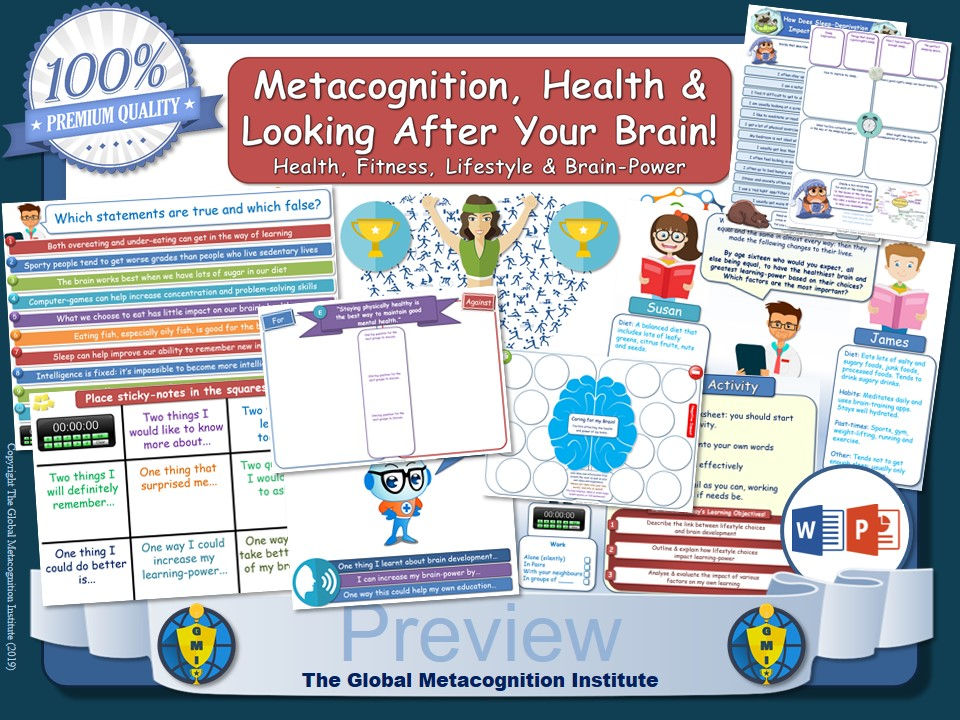
The Boosting Brain Power Toolkit! is a comprehensive resource designed to equip students with the knowledge and skills to enhance their neurological development and optimise learning power. This resource includes six dynamic 40-60 minute sessions that cover crucial topics such as hydration, sleep, nutrition, exercise, mental health, and emotional well-being. Each session provides engaging presentations, activities, and worksheets that encourage students to monitor, evaluate, and regulate their lifestyle choices. By linking these factors to metacognition and self-regulated learning, the toolkit empowers students to make informed decisions that positively impact their brain health and academic performance. Ideal for PSHE lessons, the toolkit not only supports immediate learning needs but also fosters habits that promote long-term personal and cognitive growth, making it an indispensable addition to any school’s approach to creating self-regulated, reflective learners.
Supercharging Brain Power for Improved Academic Success
Beyond supporting basic brain health, schools can adopt strategies to enhance cognitive development and optimise learning outcomes. These include:
Teaching Metacognitive Strategies: Help students develop skills for planning, monitoring, and evaluating their learning. Metacognition enables students to become more self-aware and intentional about their cognitive processes, boosting both short-term performance and long-term adaptability.
Incorporating Mindfulness and Meditation: Regular mindfulness exercises improve focus, emotional regulation, and overall brain function. These practices help students manage stress, reduce distractions, and cultivate a sense of calm and clarity.
Providing Enrichment Activities: Offer programs that challenge students intellectually, such as coding, music, or chess clubs. These activities stimulate neural growth and foster a love of learning.
Introducing Memory Techniques: Teach students strategies like mnemonics, mind mapping, and spaced repetition to enhance recall and retention. These tools improve efficiency and confidence in learning.
Leveraging Technology Wisely: Use educational technology to personalise learning and provide interactive, engaging content. However, balance this with guidance on managing screen time to prevent overstimulation and fatigue.
Encouraging Goal-Setting and Reflection: Guide students to set realistic academic and personal goals, regularly reflecting on their progress. This practice builds self-regulation and resilience while reinforcing a growth mindset.
Emphasising Creativity: Incorporate opportunities for creative expression, such as art, writing, or design projects. Creativity engages multiple areas of the brain, enhancing problem-solving and adaptability.
Facilitating Peer Learning: Use collaborative learning to encourage students to share ideas, challenge assumptions, and learn from diverse perspectives. These interactions promote deeper understanding and critical thinking.
By implementing these strategies, schools and teachers can not only support healthy brain development but also unlock students’ full cognitive potential. A focus on brain health and enhancement ensures that students are equipped to excel academically, thrive personally, and navigate the complexities of the modern world with confidence and capability.
Metacognition and reflective learning are essential components of effective education that empower students to become active, self-directed learners. Metacognition refers to the awareness and understanding of one's own thought processes—it is "cognition about cognition," involving higher-order thinking skills that enable individuals to plan, monitor, evaluate, and regulate their learning strategies. Reflective learning complements metacognition by encouraging students to critically analyze their experiences, actions, and outcomes, leading to deeper understanding and continuous improvement.
John Flavell (1976), a pioneering researcher in cognitive psychology, defined metacognition as "one's knowledge concerning one's own cognitive processes and products or anything related to them." This self-awareness arises from an individual's evaluation and observation of their cognitive behaviors within a learning environment (Ayersman, 1995). Reflective learning builds upon this foundation by promoting ongoing self-assessment and thoughtful consideration of how one learns, which enhances the ability to adapt and apply new strategies effectively.
Implementing whole-school approaches to reflective learning and metacognition can significantly enhance student attainment and foster a culture of continuous improvement. Such approaches involve integrating metacognitive and reflective practices across all aspects of schooling—from curriculum design and classroom instruction to assessment methods and school policies. By creating an environment that values and systematically incorporates reflection and metacognitive strategies, schools can help students develop the skills necessary for lifelong learning.
The impact of these practices is supported by substantial educational research. John Hattie's (2009) synthesis of over 800 meta-analyses on student achievement identified metacognitive strategies as one of the most powerful interventions for boosting academic performance. With an effect size of 0.69, metacognition surpasses many other educational interventions in its influence on student learning outcomes. By coupling metacognition with reflective learning, educators can amplify these benefits, as reflection deepens understanding and solidifies the application of metacognitive strategies.
Whole-school approaches to reflective learning and metacognition focus on:
Curriculum Integration: Embedding reflective and metacognitive activities within the curriculum to ensure that students regularly engage in planning, monitoring, and evaluating their learning.
Professional Development: Providing teachers with training and resources to effectively model and teach reflective and metacognitive strategies.
Collaborative Culture: Promoting a school culture that encourages collaboration, open dialogue, and shared reflection among students and staff.
Reflective Assessment Practices: Utilizing assessment methods that incorporate self-reflection and self-assessment, helping students to internalize feedback and set personal learning goals.
Supportive Policies: Establishing school policies that prioritize reflective practices and allocate time for reflection within the school day.
By adopting these strategies, schools can create a cohesive and supportive learning environment where reflective learning and metacognition are integral to the educational experience. This holistic approach not only enhances academic achievement but also equips students with critical thinking skills, adaptability, and resilience—qualities essential for success in an ever-changing world.
In the subsequent sections, this article will delve into practical methods for implementing whole-school approaches to reflective learning and metacognition. We will explore the roles of educators, administrators, and students in fostering a reflective learning community, and examine case studies that highlight the positive impacts of these practices on student engagement and achievement. Through a comprehensive understanding of these concepts, educators can transform their schools into environments that nurture thoughtful, self-regulated learners prepared to meet the challenges of the future.
Whole-School Approaches To Reflective Learning & Metacognition: The Basics
Senior leaders in education have a critical role to play in promoting metacognition in their schools. Here are some steps that senior leaders can take to implement whole-school metacognition strategies:
Develop a shared understanding of metacognition Before implementing any metacognition strategies, it is important to ensure that everyone in the school has a shared understanding of what metacognition is and why it is important. Senior leaders can provide professional development opportunities for teachers and staff to learn about metacognition and its benefits for students. This can involve workshops, seminars, or even guest speakers who can share their expertise on the topic. Our online training course and our in-house training materials can help you to achieve this goal.
Embed metacognition in the curriculum Metacognition strategies should be integrated into the curriculum in order to ensure that all students have opportunities to develop their metacognitive skills. This can involve explicitly teaching metacognitive strategies, such as setting goals, monitoring progress, and reflecting on learning. It can also involve designing assessments that require students to reflect on their learning and evaluate their own performance. Our range of over forty metacognitive teaching resources (suitable for all school subjects) can help you to embed metacognition in your school's curriculum.
Provide teachers with resources and support In order to effectively implement metacognition strategies, teachers need access to resources and support. Senior leaders can provide teachers with professional development opportunities, such as workshops or coaching, to help them develop their own metacognitive skills and learn how to teach metacognitive strategies to their students. Additionally, senior leaders can provide teachers with resources, such as lesson plans and activities, to help them incorporate metacognition into their teaching. Registering a Whole-School Plan with us will grant you access to our complete range of teaching and teacher-training resources and allow all of the teachers in your school to register for our online course for free!
Foster a culture of reflection and feedback Metacognition requires a culture of reflection and feedback, where students are encouraged to think about their own thinking and receive feedback from their teachers and peers. Senior leaders can promote this culture by modelling metacognitive behaviours themselves, providing feedback to teachers and staff on their own metacognitive practices, and creating opportunities for students to reflect on their learning and receive feedback on their progress.
Evaluate and adjust strategies Finally, it is important to evaluate the effectiveness of metacognition strategies and adjust them as necessary. Senior leaders can collect data on student outcomes, such as academic achievement and self-efficacy, to assess the impact of metacognition strategies. They can also seek feedback from teachers, staff, and students to identify areas for improvement and make adjustments accordingly.
The Importance of Teacher Training in Reflective Learning and Metacognition
Teacher training is a critical component of successfully implementing whole-school strategies that enhance reflective learning and metacognition. Here are key reasons why professional development in this area is invaluable:
Teachers Need to Understand Reflective Learning and Metacognition and Their Importance
To effectively implement strategies that promote reflective learning and metacognition, teachers must have a clear understanding of these concepts and their significance in student learning. This includes:
Comprehending Metacognitive Strategies: Understanding different types of metacognitive strategies such as planning, monitoring, and evaluating, and how they facilitate self-regulated learning.
Grasping Reflective Learning Practices: Recognizing how reflective learning encourages students to think critically about their experiences, fostering deeper comprehension and personal growth.
Appreciating the Impact: Realizing how these strategies improve student outcomes by enhancing problem-solving skills, adaptability, and lifelong learning capacities.
Without this foundational knowledge, teachers may struggle to implement these strategies effectively or fail to recognize their importance in enhancing student achievement.
Teachers Need to Know How to Teach Reflective and Metacognitive Strategies to Students
Understanding the concepts is only the first step; teachers also need to know how to effectively teach these strategies to their students. This involves:
Scaffolding Skill Development: Learning how to gradually build students' reflective and metacognitive abilities over time through guided practice and support.
Differentiating Instruction: Adapting teaching methods to support students at various levels of development, ensuring that all learners can engage meaningfully with reflective and metacognitive practices.
Integrating Strategies into Curriculum: Embedding reflective activities such as journals, self-assessments, and think-aloud protocols into daily lessons.
By mastering these teaching techniques, educators can empower students to become more self-aware and proactive in their learning.
Teachers Need Access to Resources and Support
Effective implementation of reflective learning and metacognition requires access to appropriate resources and support systems:
Professional Development Opportunities: Workshops, seminars, and coaching sessions that help teachers develop their own reflective and metacognitive skills and learn how to facilitate these practices in the classroom.
Instructional Materials: Providing lesson plans, activity guides, reflection prompts, and assessment tools that integrate reflective and metacognitive strategies.
Collaborative Networks: Establishing professional learning communities where teachers can share experiences, challenges, and best practices.
Access to these resources ensures that teachers are well-equipped to foster an environment conducive to reflective learning.
Teacher Training Helps Create a Culture of Reflective Learning and Metacognition
Professional development focused on these areas contributes to establishing a school-wide culture that values and promotes reflective practices:
Modeling Reflective Practices: When teachers consistently model reflective thinking and metacognitive strategies, students are more likely to adopt these behaviors.
Consistency Across Classrooms: A unified approach ensures that students encounter reflective learning opportunities throughout their school day, reinforcing the importance and application of these skills.
Encouraging a Growth Mindset: Cultivating an atmosphere where reflection and self-assessment are integral to learning fosters resilience and a willingness to embrace challenges.
This cultural shift enhances the overall learning environment, benefiting both students and staff.
Enhancing Student Engagement and Ownership of Learning
Trained teachers can better engage students in reflective learning, leading to:
Increased Motivation: Students who understand their learning processes are more motivated to set goals and pursue them actively.
Improved Self-Regulation: Reflective practices help students monitor their progress and make informed adjustments to their strategies.
Empowerment: Students gain confidence as they recognize their ability to influence their learning outcomes through reflection and metacognition.
Aligning with Educational Standards and 21st-Century Skills
Integrating reflective learning and metacognition aligns with educational standards that emphasize critical thinking, problem-solving, and self-directed learning:
Preparing for Future Challenges: These skills are essential for success in higher education and the workforce.
Promoting Lifelong Learning: Students learn how to learn, adapting to new situations and information throughout their lives.
Supporting Diverse Learners
Teacher training enables educators to:
Address Individual Needs: Tailor reflective and metacognitive activities to accommodate different learning styles and abilities.
Foster Inclusivity: Create an environment where all students feel valued and capable of contributing meaningfully to their learning.
Investing in teacher professional development focused on reflective learning and metacognition is crucial for the successful implementation of whole-school strategies aimed at enhancing these practices. By equipping teachers with the knowledge, skills, and resources needed to teach and model reflective and metacognitive strategies, schools can foster a supportive culture that promotes continuous improvement and student success. This comprehensive approach not only benefits students by improving their academic outcomes and fostering critical thinking skills but also empowers teachers to grow professionally. It cultivates a collaborative and dynamic learning environment where reflective practices are woven into the fabric of the school culture. Ultimately, a commitment to teacher training in reflective learning and metacognition is an investment in the future of education. It prepares students to navigate an ever-changing world with confidence, adaptability, and a deep understanding of their own learning processes. By embracing these strategies, schools can unlock the full potential of both teachers and students, paving the way for academic excellence and lifelong success.
In order to effectively implement whole-school teacher-training focused on metacognition and self-regulated learning you can either use our in-house teacher training resources or our online course; if you register a Whole-School Plan with us you can download all of the in-house teacher training resources as a part of your package and you will be given a special link to give to your teachers so that they can all use our online training course!
Provide Teachers with Comprehensive Resources to Foster Reflective Learning and Metacognition
To effectively support students in developing metacognitive abilities and reflective learning skills, it is crucial for educational leaders to equip teachers with a rich suite of teaching resources and instructional materials focused on these areas. By doing so, schools can empower teachers to implement strategies that enhance students' awareness of their own learning processes, ultimately leading to improved academic outcomes and lifelong learning skills.
Importance of Providing Teaching Resources:
Enhancing Teachers' Understanding and Implementation of Reflective and Metacognitive Strategies
Not all teachers may have extensive background knowledge or training in metacognition and reflective learning. Providing comprehensive resources helps bridge this gap by:
Building Foundational Knowledge: Resources such as scholarly articles, instructional guides, and theoretical frameworks deepen teachers' understanding of metacognition and reflective practices, including key concepts, benefits, and pedagogical approaches.
Practical Application: Access to lesson plans, classroom activities, and real-world examples demonstrates how to effectively integrate reflective and metacognitive strategies into daily teaching.
Professional Development: Ongoing access to resources supports continuous learning and professional growth, enabling teachers to stay updated on best practices and emerging research in the field.
Ensuring Consistency Across Classrooms and Grade Levels
Consistency in teaching approaches enhances the effectiveness of reflective learning and metacognitive strategies throughout the school by:
Establishing a Unified Approach: Shared resources promote a common language and methodology, ensuring that all students receive consistent instruction in metacognitive practices regardless of the teacher or subject.
Vertical Alignment: Resources tailored for different grade levels help teachers build upon students' skills progressively, creating a coherent learning experience as students advance.
Facilitating Collaboration: Consistent materials encourage collaboration among teachers, allowing them to share insights, strategies, and experiences, thus strengthening the overall instructional quality.
This is especially important in larger schools or districts where coordinating professional development for all staff may be challenging.
Saving Teachers Time and Effort
Developing instructional materials from scratch can be time-consuming and burdensome for individual teachers. Providing high-quality resources:
Reduces Workload: Teachers can focus more on delivering engaging instruction and supporting individual student needs rather than creating materials.
Increases Efficiency: Ready-made resources ensure that instructional time is utilized effectively, with materials that are aligned with educational standards and best practices.
Encourages Adoption: Easy access to well-designed resources lowers barriers to implementing reflective and metacognitive strategies, making it more likely that teachers will integrate them into their teaching.
Supporting Differentiation and Personalization
A diverse array of resources enables teachers to tailor instruction to meet the varied needs of their students by:
Addressing Diverse Learning Styles: Materials that incorporate various instructional methods cater to visual, auditory, kinesthetic, and reading/writing learners.
Accommodating Different Abilities: Resources can be adapted for students with different skill levels, including those with learning disabilities or gifted learners, ensuring inclusivity.
Providing Multiple Pathways: Offering a range of activities allows students to engage with reflective and metacognitive practices in ways that resonate with them personally, enhancing engagement and effectiveness.
Building a School-wide Culture of Reflective Learning and Metacognition
When all teachers have access to and utilize similar resources:
Creating a Shared Vision: A common set of practices fosters a unified commitment to promoting reflective learning and metacognition across the school.
Reinforcing Learning: Students experience consistent approaches and expectations in different classrooms, reinforcing the importance of these skills.
Cultivating a Community of Practice: Teachers can collaborate more effectively, sharing successes, challenges, and strategies, which enhances professional growth and instructional quality.
This cohesive approach embeds reflective learning and metacognition into the school's ethos, positively impacting student attitudes and behaviors toward learning.
Additional Benefits:
Facilitating Parental Involvement: Resources can be extended to parents, enabling them to support reflective and metacognitive practices at home, creating a holistic learning environment.
Aligning with Educational Standards: Well-developed resources ensure that reflective learning and metacognitive activities align with curriculum standards and learning objectives, promoting academic excellence.
Enhancing Assessment Practices: Access to assessment tools and reflective prompts helps teachers evaluate not only content knowledge but also students' metacognitive growth, informing instruction and support.
Implementing Effective Resources:
To maximize the benefits of providing resources, educational leaders should consider the following strategies:
Curate High-Quality Materials: Select resources that are research-based, culturally responsive, and adaptable to different classroom contexts.
Provide Training on Resource Utilization: Offer professional development sessions that guide teachers on how to effectively implement the provided materials.
Encourage Teacher Input: Involve teachers in the selection and development of resources to ensure they meet classroom needs and promote buy-in.
Utilize Technology Platforms: Leverage digital platforms to distribute resources, facilitate collaboration, and update materials as needed.
Monitor and Evaluate Impact: Regularly assess the effectiveness of the resources in improving teaching practices and student outcomes, making adjustments as necessary.
By equipping teachers with a comprehensive suite of teaching resources focused on reflective learning and metacognition, educational leaders can significantly enhance instructional practices and student learning experiences. These resources empower teachers to confidently implement strategies that develop students' self-awareness, critical thinking, and self-regulated learning skills.
Investing in such resources is an investment in the professional development of teachers and the academic success of students. It promotes a collaborative, reflective, and growth-oriented school culture where both educators and learners are engaged in continuous improvement. Ultimately, providing access to quality resources is a crucial step toward preparing students to become independent, lifelong learners equipped with the skills necessary to navigate an ever-changing world.
We've made a suite of over fifty teaching resources for use with students aged 11-16 that can be used by teachers of all subjects; the most affordable way to access this suite of teaching resources for all the teachers in your school is by registering a Whole-School Plan that will allow you to download everything to your school's Local Area Network!
References
Ayersman, D. J. (1995). Effects of Knowledge Representation Format and Hypermedia Instruction on Metacognitive Accuracy. Computers in Human Behavior, 11(3-4), 533-555.
Flavell, J. H. (1976). “Metacognitive Aspects of Problem Solving”. In L. Resnick (Ed.). The Nature of Intelligence (pp.231-236). Hillsdale, New Jersey: Lawrence Erlbaum Associates.
Hattie, J. (2015). The applicability of Visible Learning to higher education. Scholarship of Teaching and Learning in Psychology, 1(1), 79-91.